
Bike Manual Trainers: A Comprehensive Guide (Updated 12/04/2025)
Today, December 4th, 2025, explore the world of indoor cycling! Modern bike trainers offer connectivity via Wi-Fi and Bluetooth for enhanced tracking and smart app integration.
What is a Bike Manual Trainer?
A bike manual trainer, also known as an indoor bike trainer, is a device that allows you to ride your bicycle indoors. Essentially, it transforms your regular bike into a stationary exercise machine. These trainers connect to your bike’s rear wheel, providing resistance that simulates the experience of riding on the road.
Unlike traditional stationary bikes, you use your own bicycle with a trainer. This offers a personalized fit and feel, utilizing components you’re already accustomed to. Modern trainers aren’t just simple resistance units; many boast smart features, connecting via Wi-Fi and Bluetooth to apps for data tracking and interactive training experiences. They are a fantastic solution for consistent training, regardless of weather conditions.
Benefits of Using a Bike Manual Trainer
Consistent Training: Bike trainers allow you to maintain your cycling fitness year-round, unaffected by inclement weather or limited daylight. Convenience: Train in the comfort of your home, saving time and eliminating travel to cycling routes.
Data Tracking: Many trainers connect to apps via Bluetooth and Wi-Fi, providing detailed performance metrics like power output, speed, and cadence. Personalized Workouts: Easily integrate with virtual cycling platforms for structured training plans and immersive riding experiences.
Cost-Effective: Utilizing your existing bike is often more affordable than purchasing a dedicated stationary bike. Reduced Wear & Tear: Indoor training minimizes exposure to harsh road conditions, extending the life of your bicycle.
Types of Bike Trainers
Diverse Options: The cycling trainer market presents a variety of technologies to suit different budgets and training goals. Four Main Categories: Trainers broadly fall into magnetic, fluid, roller, and wind resistance types, each offering a unique feel and performance characteristic;
Smart Trainers: Increasingly popular, these connect wirelessly for interactive training experiences. Basic Trainers: Simpler models provide resistance without electronic features, focusing on fundamental training. Choosing the Right Type: Consider your training intensity, budget, and desired level of realism when selecting a trainer.
Connectivity: Many modern trainers boast Wi-Fi and Bluetooth capabilities for seamless integration with cycling apps and virtual platforms.

Magnetic Resistance Trainers
How They Work: Magnetic resistance trainers utilize magnets to create drag, simulating hills or varying wind conditions. Adjustable Resistance: Typically, resistance is adjusted manually via a cable or lever, offering precise control over workout intensity.
Quiet Operation: These trainers are known for their relatively quiet operation, making them ideal for apartment living or early morning workouts; Affordability: Magnetic trainers generally represent a good balance between price and performance, making them accessible to a wider range of cyclists.
Smooth Feel: They provide a smooth and consistent resistance curve, suitable for both beginners and experienced riders. Connectivity: Some models now include smart features and wireless connectivity.
Fluid Resistance Trainers
Unique Technology: Fluid resistance trainers employ a sealed fluid chamber to generate resistance. As your rear wheel spins, it interacts with the fluid, creating drag. Realistic Ride Feel: This system mimics the feel of riding outdoors more closely than magnetic trainers, offering progressive resistance – the faster you pedal, the harder it gets.
Quiet and Smooth: Fluid trainers are exceptionally quiet and provide a remarkably smooth riding experience. Durability: They are known for their robust construction and longevity, requiring minimal maintenance.
Higher Price Point: Generally, fluid trainers are more expensive than magnetic models. Limited Adjustability: Resistance adjustment is less precise compared to magnetic trainers.
Roller Trainers
Simplicity in Design: Roller trainers consist of rear rollers that your bike’s rear wheel rests upon. They don’t provide resistance in the traditional sense; instead, they demand constant balance and pedaling to maintain momentum. Skill Development: This makes them excellent for improving bike handling skills and core strength.
Affordability: Roller trainers are typically the most affordable type of bike trainer. Portability: Their lightweight and compact design makes them easy to transport and store.
Steep Learning Curve: Mastering a roller trainer requires practice and can be challenging for beginners. No Resistance Control: They offer no adjustable resistance levels for structured workouts.
Wind Resistance Trainers
Classic Technology: Wind resistance trainers utilize a fan to create resistance; the faster you pedal, the more wind resistance you encounter. Progressive Resistance: This provides a naturally progressive resistance curve, mimicking outdoor riding conditions to a degree.
Affordable Option: They generally fall in the mid-range price point, offering a balance between cost and functionality. Noise Level: Wind trainers can be quite noisy due to the fan operation, which may be a consideration for some users.
Less Precise Control: Resistance isn’t as precisely controllable as with magnetic or fluid trainers; Weather Sensitivity: Airflow can be affected by drafts, impacting consistency.

Key Features to Consider
Essential factors include resistance levels, bike compatibility, wheel and frame size, and overall build quality for a durable and effective indoor training experience.
Resistance Levels & Adjustment
Resistance is paramount for effective indoor cycling. Trainers offer varied resistance, simulating flat roads to steep climbs. Adjustment mechanisms differ; some use levers, others remote controls, and smart trainers auto-adjust via apps.
Consider your fitness level. Beginners benefit from a wide, easily adjustable range. Experienced cyclists may prefer precise, higher resistance settings. Smart trainers excel here, dynamically changing resistance based on virtual routes or power targets.
Look for trainers with a substantial resistance range – ideally, capable of replicating significant gradients. Smooth, consistent resistance changes are crucial for realistic training and avoiding jarring transitions. Fine-tuning control is also important for personalized workouts.
Compatibility with Your Bike
Ensuring compatibility is vital before purchasing a bike trainer. Most trainers accommodate various bike frame types – road, mountain, hybrid – but check specifications carefully. Quick-release skewers are often required for easy bike attachment, though some trainers include adapters for thru-axles.
Frame geometry can sometimes pose challenges. Step-through frames or bikes with unusual seatpost/chainstay configurations might need specific adapters. Verify compatibility with the trainer manufacturer’s guidelines.
Consider your bike’s dropouts. Trainers typically clamp to the rear dropouts, so their spacing must align with the trainer’s design. Proper fit prevents damage to your bike and ensures a secure, stable training experience.
Wheel Size Compatibility
Wheel size is a crucial factor when selecting a bike trainer. Most trainers readily accommodate common wheel sizes – 700c, 650c, and 29” – which cover the majority of road and mountain bikes. However, smaller wheel sizes, like those found on some older road bikes or children’s bikes, may require adapters.
Check the trainer’s specifications to confirm supported wheel sizes. Some trainers offer adjustable compatibility, while others are limited to specific diameters. Using an incompatible wheel size can lead to inaccurate resistance readings and potentially damage the trainer or your bike.
Tire width also plays a role; ensure your tire fits comfortably within the trainer’s frame.
Frame Material Compatibility
Most bike trainers are designed to work with a wide range of bicycle frame materials, including steel, aluminum, carbon fiber, and titanium. However, carbon fiber frames require extra caution. Always check the trainer manufacturer’s recommendations regarding carbon fiber compatibility.
Some trainers utilize clamping mechanisms that could potentially damage a carbon fiber frame if overtightened. Using a protective adapter or ensuring proper torque settings is vital. Quick-release skewers are generally compatible, but thru-axle bikes may need a specific adapter.

Verify the trainer’s maximum weight capacity to ensure it can safely support your bike and rider combination.
Build Quality & Durability
A robust build is crucial for a bike trainer’s longevity and performance. Look for trainers constructed with high-quality materials like heavy-gauge steel or durable composites. Welds should be clean and consistent, indicating solid construction.
Consider the trainer’s weight capacity; a higher capacity often suggests a more durable frame. Read user reviews to gauge real-world experiences with the trainer’s reliability. A well-built trainer will withstand intense workouts and frequent use without significant wear and tear.
Check the warranty offered by the manufacturer – a longer warranty often reflects confidence in the product’s durability.

Setting Up Your Bike Manual Trainer
Proper setup is key for safe and effective training. This involves initial assembly, calibrating resistance, and securely attaching your bicycle to the trainer unit.
Initial Assembly & Calibration
Unboxing and assembly typically involve attaching the trainer’s legs and frame components, often requiring minimal tools. Carefully follow the manufacturer’s instructions – diagrams are incredibly helpful! Once assembled, calibration is crucial for accurate resistance readings.
Many trainers feature an adjustment knob or digital interface for calibration. This process usually involves setting the trainer to a zero-resistance level and verifying it spins freely. Some smart trainers automatically calibrate via connected apps. Regularly check calibration, especially after transport or significant temperature changes, to ensure consistent and reliable training data. A properly calibrated trainer provides a realistic and effective indoor cycling experience.
Securing Your Bike to the Trainer
Proper bike attachment is paramount for safety and effective training. Most trainers utilize a quick-release skewer or thru-axle adapter to clamp the bike’s rear wheel. Ensure the skewer is securely tightened, but avoid over-tightening, which could damage the wheel or trainer.
Frame contact points are also vital. Some trainers support the bike frame directly; ensure these points are clean and padded to prevent scratches. Double-check all connections before starting your ride. A wobbly or insecure bike can lead to instability and potential injury. Regularly inspect the skewer and frame contact points for wear and tear, replacing components as needed.
Proper Positioning for Optimal Training
Mimic your outdoor riding position as closely as possible. Adjust your bike’s seat height and handlebar reach to replicate your preferred geometry. A comfortable position minimizes strain and maximizes power transfer. Consider using a bike fit specialist for personalized adjustments.
Ensure adequate ventilation as indoor training can generate significant heat. Position a fan to circulate air and prevent overheating. Hydration is key; keep water readily accessible. A stable surface is crucial – use a trainer mat to protect your floor and reduce noise. Finally, remember to look ahead and maintain good posture throughout your workout.
Training with a Bike Manual Trainer

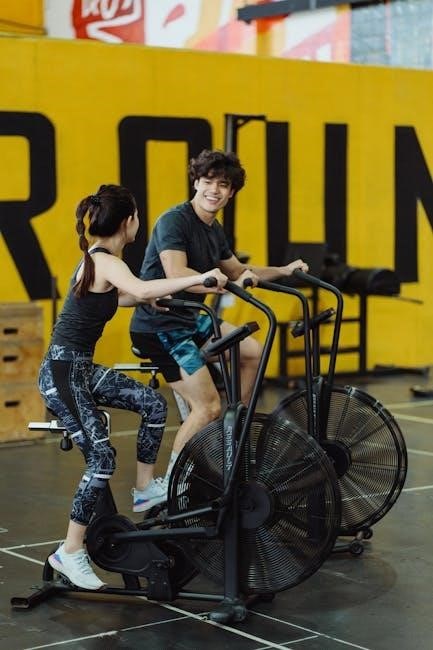
Elevate your fitness with structured workouts! Incorporate warm-ups, cool-downs, intervals, endurance sessions, and simulated hill climbs for a comprehensive training experience.
Warm-up and Cool-down Routines
Prioritize your body with dedicated warm-up and cool-down phases when using a bike manual trainer. A proper warm-up, lasting 5-10 minutes, prepares muscles for exertion. Begin with low resistance and a comfortable cadence, gradually increasing intensity.
Include dynamic stretches like leg swings and torso twists off the bike. Cool-downs are equally crucial, aiding recovery and reducing muscle soreness.
Slowly decrease resistance over 5-10 minutes, maintaining a light pedal stroke. Static stretches, holding each for 20-30 seconds, targeting quads, hamstrings, and calves, complete the process. Consistent warm-ups and cool-downs maximize training benefits and minimize injury risk.
Interval Training Workouts
Maximize your fitness with interval training on your bike manual trainer! This method alternates between high-intensity bursts and recovery periods, boosting cardiovascular health and endurance. A classic workout: 30 seconds of all-out effort, followed by 60-90 seconds of easy spinning.
Repeat this cycle 8-12 times.
Adjust the work/rest ratio based on your fitness level. Increase resistance during high-intensity intervals to simulate climbs. Utilize the trainer’s adjustable features for varied challenges. Remember to maintain proper form throughout. Interval training is incredibly efficient, delivering significant results in shorter sessions, and is perfect for pushing your limits indoors.
Endurance Training Strategies
Build stamina and improve your aerobic capacity with focused endurance training on your bike manual trainer. Maintain a consistent, moderate intensity for extended periods – aim for 45-90 minutes. Keep your cadence (pedal speed) relatively high, around 80-90 RPM, to reduce strain.
Gradually increase the duration of your rides each week.
Utilize a consistent resistance level that challenges you without causing excessive fatigue. Focus on maintaining a steady breathing pattern. Hydrate regularly throughout your session. Endurance training enhances your body’s ability to utilize oxygen efficiently, improving overall cycling performance and cardiovascular health.
Simulating Hill Climbs
Transform your indoor training with realistic hill climb simulations using your bike manual trainer! Gradually increase the resistance to mimic ascending a slope. Begin with moderate inclines and progressively challenge yourself with steeper gradients.
Focus on maintaining a consistent cadence, even as resistance increases; lower your cadence if needed, but avoid abrupt shifts.
Employ a seated climbing position, engaging your core for stability. Incorporate short, high-intensity bursts followed by recovery periods to replicate varied terrain. Hill simulations build leg strength, improve power output, and prepare you for outdoor climbs.
Maintenance and Care
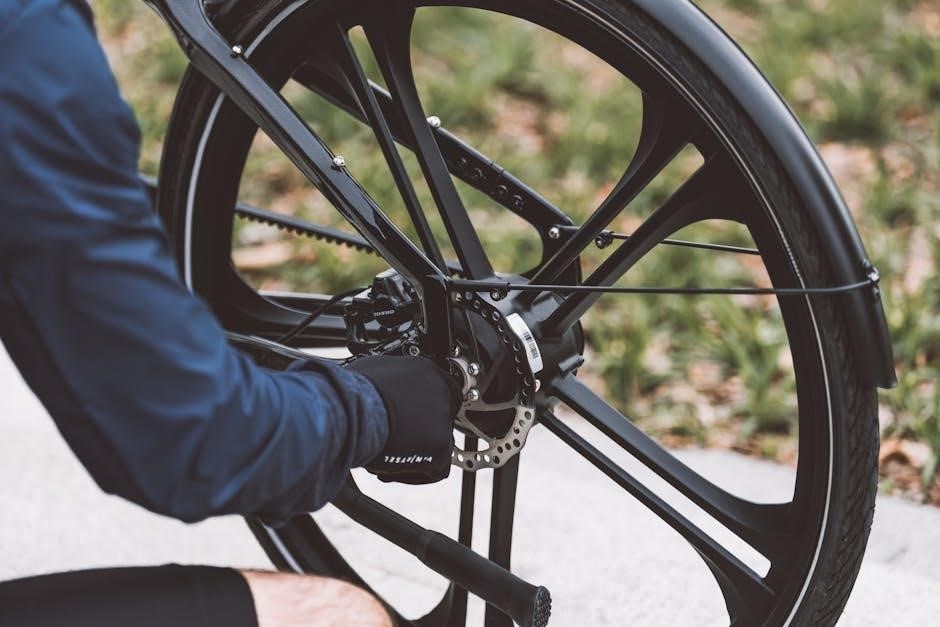
Regular upkeep ensures longevity! Clean your bike trainer, lubricate moving parts, and store it properly to maintain peak performance and prevent wear.
Cleaning Your Bike Trainer
Consistent cleaning is vital for a smoothly functioning bike trainer and extends its lifespan considerably. After each use, wipe down the frame with a damp cloth to remove sweat and dust. Pay particular attention to the roller or magnetic resistance unit, as buildup here can affect performance.
For stubborn grime, a mild detergent solution can be used, but avoid harsh chemicals or abrasive cleaners. Ensure the trainer is completely dry before storage to prevent rust or corrosion. Regularly inspect the connections and moving parts for any debris accumulation. A clean trainer equates to a more efficient and enjoyable indoor cycling experience, preserving your investment for years to come.
Lubrication and Part Replacement
Regular lubrication is key to maintaining a smooth and quiet bike trainer. Apply a silicone-based lubricant to any moving parts, such as the roller mechanism or resistance unit, as recommended by the manufacturer. Avoid oil-based lubricants, as they can attract dust and grime.
Over time, certain parts may wear out and require replacement. Common components include the roller, belt (for roller trainers), or resistance unit. Consult your trainer’s manual for specific part numbers and replacement instructions. Proactive part replacement prevents more significant damage and ensures continued optimal performance. Don’t hesitate to seek professional assistance if you’re unsure about any repair.
Storage Recommendations
Proper storage extends the life of your bike trainer. When not in use, store it in a clean, dry environment, away from direct sunlight and extreme temperatures. Dust covers are highly recommended to protect against dirt and debris accumulation.
For space-saving storage, many trainers are foldable. If yours is, carefully collapse it according to the manufacturer’s instructions. Avoid stacking heavy objects on top of the trainer, as this could cause damage. Regularly inspect the trainer for any signs of wear or damage before storing it, addressing issues promptly to prevent further deterioration during prolonged inactivity.